The Navy’s New Power Play: 5 Surprising Lessons from the Front Lines of Energy Security
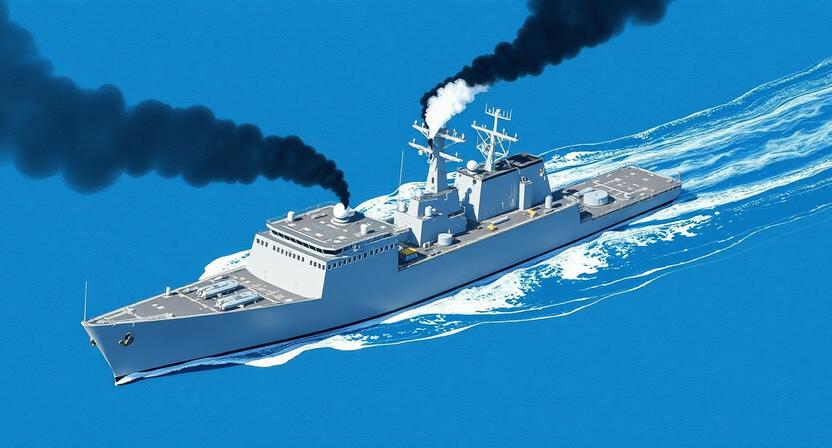
The Navy’s New Power Play: 5 Surprising Lessons from the Front Lines of Energy Security
1. Introduction: The Fragility of the Status Quo
The American electric grid is a 20th-century titan leaning on 19th-century crutches. While it remains a marvel of engineering, its centralized, radial architecture—where power flows from distant plants to passive users—is fundamentally brittle. For a modern economy, this fragility isn’t just an inconvenience; it is a $100 billion annual drain fueled by cascading failures, extreme weather, and aging hardware.
In the face of this systemic risk, the U.S. Navy has emerged as an unexpected pioneer in decentralized energy architecture. Their weapon of choice? The microgrid. In the simplest terms, a microgrid is a localized cluster of interconnected loads and power sources that can act as a single, controllable entity. Its “killer app” is islandability: the ability to sever its connection to the main grid during a blackout and operate as a self-sustaining energy fortress. As the Navy moves toward this future, they are rewriting the rules of energy security for the rest of us.
2. The 40% Failure Rate: Why Backup Generators Aren’t Enough
For decades, the standard playbook for energy security was “buy a diesel generator and hope it starts.” But on the front lines, the Navy has discovered that this “imperfect solution” is more of a gamble than a guarantee. A 2010 report from Sandia National Laboratories revealed a staggering statistic: military backup generators fail to start roughly 40% of the time.
The problem is that traditional backup systems are “static” and “discontinuous.” They are hard-wired to specific buildings, offering zero flexibility. If a generator at a critical communication center fails, a base commander cannot simply “reroute” power from a nearby building’s generator. Furthermore, these systems require a 30-second warmup period—an eternity for sensitive intelligence and meteorological equipment that requires “always-on” power. As the Department of the Navy (DoN) succinctly put it:
“Energy is critical to every mission, and as such it will always present a significant vulnerability.” — DoN Strategy for Renewable Energy (2012)
3. The 1 GW Paradox: Why Bigger Isn’t Always Better
Under the Navy’s 1 GW Task Force, the service has pushed aggressively toward large-scale renewable projects—specifically utility-scale arrays exceeding 20 MW. However, there is a paradox at the heart of this strategy: while these massive projects help hit high-level procurement targets, they can actually undermine local resilience by creating new “choke points.”
If a single 20 MW solar farm or its transmission line is sabotaged, the security benefit to the base vanishes. True resilience, as seen at locations like MCAS Miramar and Naval Base San Diego, requires a shift in how the Navy views its “load.” Unlike a static generator, a microgrid must manage critical loads that shift in “time, space, and size” during an emergency. By integrating smaller, distributed resources rather than a few massive ones, the Navy eliminates single points of failure and creates a dynamic system that can adapt to the shifting needs of a mission in real-time.
4. Building the “Brain” First: The Power of Enhanced Controls
You don’t need a multi-million-dollar battery array to start seeing the benefits of a microgrid; you just need to build the “brain” first. The Navy is increasingly focused on enhanced energy controls—automated systems that manage how and when electricity is used.
A powerful civilian proof-of-concept exists at Drexel University. By implementing automated demand response and dynamic controls, Drexel slashed its annual electricity bill by 10%, saving more than $50,000. The Navy is now applying this logic to high-stakes military environments. These controls provide the “physical and experiential basis” for full microgrids. It is as much a transition of human capital as it is of hardware; by mastering load management today, Naval personnel are gaining the tactical experience required to operate a fully autonomous islanded base tomorrow.
5. The Navy as a “Day Trader”: The Shift to Spot Markets
In a move that mirrors the high-stakes world of finance, NAVFAC Southwest is shifting its procurement strategy. For years, the Navy relied on two-year futures contracts to ensure price stability. Now, they are moving toward the California spot market.
This transition transforms the Navy from a passive customer into an active “market participant” or “day trader.” With a microgrid, a base can use its on-site assets to either save money or generate actual revenue.
Direct Revenue Generation (Earning Money):
- Ancillary Service Markets: Bidding fast-responding resources into markets that reward grid stability.
- Non-Generating Resource (NGR) Designation: Allowing a microgrid to provide energy and services to the wholesale market even when exporting power.
Operational Cost Reduction (Saving Money):
- Peak Shaving: Utilizing on-site supply to drop demand during the most expensive hours of the day.
- Proxy Demand Response (PDR): Reducing facility load in exchange for compensation when the grid is stressed.
6. Red Tape vs. Resilience: The Hidden Barriers to Innovation
Despite the technical logic of microgrids, the Navy faces a formidable opponent: its own bureaucracy. The workshop identified three primary hurdles where policy and culture lag behind technology:
- Split Incentives: The budgetary silos that fund infrastructure are often disconnected from the offices that benefit from lower energy bills, creating a “who pays, who gains” deadlock.
- Acquisition Processes: Rigid regulations currently require formal vendor selection for even informal expertise, slowing the Navy’s ability to engage with agile tech innovators.
- Tri-Service Unified Facilities Criteria (UFC): Outdated “Tri-Service” design specifications, such as UFC 2-000-05N, often mandate traditional diesel generators for compliance. This forces engineers to install redundant, inferior backup systems even when a superior microgrid solution is already operational.
7. Conclusion: A New Paradigm for Power
The Navy’s energy vision is a radical departure from the status quo. It is an evolution from being a victim of grid fragility to becoming a master of independent power. By pursuing net-zero facilities and sophisticated microgrids, the Navy is creating a blueprint for a more resilient nation.
“To improve energy security, DoN must evolve beyond simply providing emergency generators for individual buildings to being able to provide reliable, sustained power to designated substations with the capability to match sources to critical loads.” — DoN Strategy for Renewable Energy (2012)
The Navy isn’t just upgrading its power lines; it is upgrading its survival strategy. If the world’s most sophisticated military is rethinking its relationship with the grid to ensure mission success, why are the rest of us still waiting for the next blackout to take action?