The Shenzhen Ascent: How a Former Fishing Village Is Rewriting the Silicon Valley Playbook

The Shenzhen Ascent: How a Former Fishing Village Is Rewriting the Silicon Valley Playbook
1. Introduction: The 30-Year Miracle
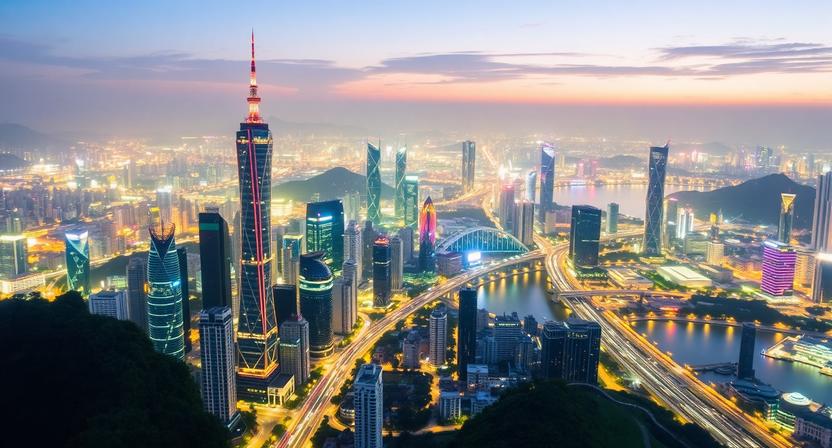
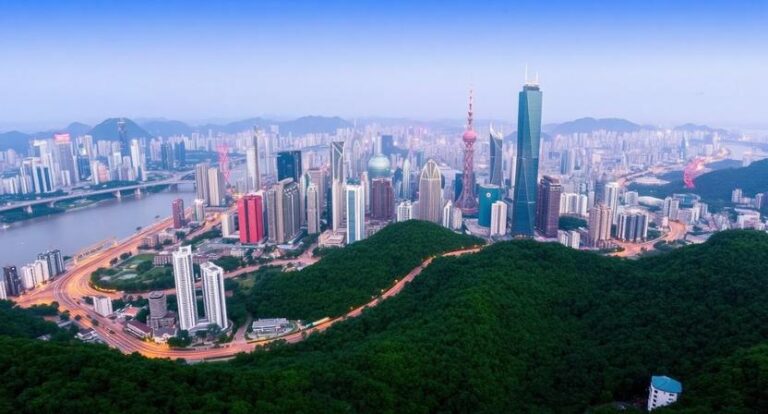
Over the last three decades, a radical transformation has unfolded on China’s southern coast that challenges our traditional understanding of urban evolution. What was once a sleepy fishing village has morphed, at a breakneck pace, into a prosperous megacity and a global powerhouse of disruptive technology. This is the “miracle city”—a high-velocity ecosystem that has successfully pivoted from a hub of low-tech, labor-intensive assembly to become the world’s premier center for high-tech, clean-tech, and robotics. Shenzhen is no longer just China’s first Special Economic Zone; it is a global engine for innovation where the future is being prototyped in real-time.
2. The City Where No One Is a “Local”
Shenzhen holds the distinction of being China’s largest immigrant city, a demographic reality that fuels a relentless entrepreneurial meritocracy. The scale of this migration is unparalleled; no other city on Earth has gained more residents since 1980. While the total population has swelled to approximately 18 million, the city’s social fabric is defined by its “floating” nature. Only about 30% of residents are officially registered with a hukou (residency permit). This leaves a massive population of roughly eight million long-term residents and another eight million short-term migrants, creating a hyper-mobile workforce.
This demographic churn dissolves traditional Chinese social hierarchies, replacing them with an open, Silicon Valley-style “melting pot” where cross-border flows of human capital are the norm.
“You are a Shenzhener once you come here.”
This philosophy has turned the city into a “true paradise” for entrepreneurs. By stripping away the barriers of localism, Shenzhen has attracted a new generation of high-tech experts and craftsmen who view the city as a land of opportunity unmatched by any other Chinese metropolis.
3. BYD: The Green Giant You Didn’t See Coming
In 1995, a 29-year-old battery chemist named Wang Chuanfu founded BYD (“Build Your Dreams”) in a modest Shenzhen factory. Within five years, he had built the world’s largest cell phone battery manufacturer. However, BYD’s true disruption lay in its vision for a “new energy total solution.” After releasing the world’s first plug-in hybrid electric car in 2008, the company secured a $230 million investment from Warren Buffett, signaling its arrival on the global stage.
BYD is more than a car manufacturer; it is a sophisticated environmental ecosystem. The company focuses on “grid parity” and “grid quality,” ensuring that clean energy is both cost-competitive and reliable. Their technical sophistication includes:
- Solar Tracking Technology: Advanced panels that follow the sun’s path, increasing efficiency by 29%.
- Energy Storage Systems (ESS): Massive battery arrays designed to stabilize the grid by matching peak loading times.
- Double-glass Solar Panels: High-efficiency components engineered to be cost-competitive without relying on excessive precious metals.
“The official sponsor of Mother Nature.”
4. DJI and the “Steve Jobs of Drones”
The rise of SZ DJI Technology Co. (DJI) reads like a classic Silicon Valley startup narrative, yet its roots are firmly planted in the talent flow between Hong Kong and Shenzhen. Founder Frank Wang, a graduate of the Hong Kong University of Science & Technology (HKUST), moved across the border to launch his startup from a three-bedroom apartment in 2006. Today, DJI controls over 70% of the global consumer drone market.
Often called the “Apple of drones,” DJI is led by Wang, an “abrasive perfectionist” whose management philosophy centers on a singular mandate: “be smarter than others.” DJI’s competitive advantage stems from its rigorous in-house engineering culture. Unlike competitors who outsource hardware, DJI designs every component—from the 4K cameras and stabilized gimbals to the radar sensors and software—within its own walls. By launching the Phantom series at a disruptive $679, DJI didn’t just capture a market; it engineered one from scratch.
5. Huawei: The 5G Powerhouse
No discussion of Shenzhen’s ICT dominance is complete without Huawei. Founded in 1987 by Ren Zhengfei with just $3,300, Huawei has evolved into the world’s largest telecommunications equipment manufacturer. This ascent was fueled by a relentless commitment to R&D; as of 2015, the company employed over 76,000 people in its research divisions alone.
Huawei is currently the primary “disruption enabler” in the race for 5G. This technology, which is 66 times faster than 4G, will eventually connect 100 billion devices, facilitating everything from remote surgery to the Internet of Things. Huawei’s lead in this sector is backed by sheer volume: in 2014, the company submitted 3,442 international patent applications, significantly outperforming US-based Qualcomm, which submitted 2,409. By testing these networks in Shenzhen’s “smart city” environment, Huawei is cementing the city’s status as the lead node in the global ICT network.
6. Tencent: Building a Cashless Empire
While Silicon Valley has Facebook, Shenzhen has Tencent—an internet titan that has redefined the intersection of social networking and commerce. Led by Ma Huateng, the company’s ecosystem is anchored by QQ (899 million users) and WeChat (700 million active users), as of June 2016.
Tencent’s most profound impact is its revolution of mobile payments. By integrating services like the ride-sharing giant Didi Chuxing directly into its interface, Tencent created a seamless user experience. The financial scale is staggering: in 2016, Tencent’s transaction volume reached an estimated $556 billion—nearly doubling the $280 billion processed by PayPal. This integration has effectively turned Shenzhen into a cashless society, setting the global standard for the future of fintech.
7. Where CEOs Walk Ahead of Officials
Shenzhen’s success is underpinned by a “small and purposeful” local government model. Unlike the state-controlled planning seen elsewhere in China, the Shenzhen government acts as a catalyst for market-led growth. A central player in this is the Shenzhen Development and Reform Commission (SDRC), which oversees urban construction to mitigate climate change and implements clean development policies.
The unique power dynamic here is visible in public protocol. In most Chinese cities, officials lead; in Shenzhen, the roles are reversed. High-level executives like BYD’s Wang Chuanfu have been observed walking ahead of, or side-by-side with, President Xi Jinping. This symbolic shift highlights a government that prioritizes corporate innovation. This support is practical as well as symbolic: the city subsidizes up to 70% of rent for “creative” startups and has attracted outside giants like Baidu, which moved its International Operations Headquarters and R&D center to Shenzhen to test driverless cars in partnership with BYD.
8. The 28.7-Year-Old “Buzz”
Demographics are the lifeblood of this innovation ecosystem. Shenzhen possesses a palpable “buzz” driven by its youth; the average age of a resident is just 28.7 years old. In stark contrast, Shanghai’s population is aging, with an average age over 40 and 27% of its registered residents over the age of 60.
This youthful energy is reinforced by the city’s proximity to Hong Kong, which serves as a vital neighbor for the flow of talent and ideas. However, the roles have shifted. While Hong Kong was once the region’s primary innovator, a recent university study noted a feeling that the city has lost its “can-do spirit,” with some local designers even declaring Hong Kong’s innovation “doomed.” As Hong Kong’s luster fades, Shenzhen has captured the region’s creative momentum.
9. Conclusion: The Silicon Valley of the East?
Shenzhen’s ascent is the product of a perfectly balanced quartet of factors: a small and purposeful government, a dense population of immigrants, a youthful “buzz,” and a rapidly expanding higher education sector.
The city has now reached a critical mass of innovation. In 2014, the patent data told a clear story: Huawei outpaced Qualcomm (3,442 vs 2,409), while fellow Shenzhen firm ZTE outperformed Intel (2,179 vs 1,539). With its concentration of tech giants and agile startups, Shenzhen is no longer just “emerging”—it is competing for the crown. The question is no longer if Shenzhen can rival Silicon Valley, but rather: how long will it be before the world looks to Shenzhen as the primary engine of the technological future? All evidence suggests the miracle is only beginning.