Orbán
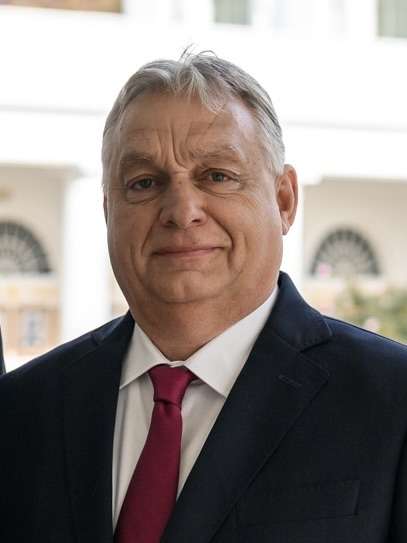
For sixteen years, Viktor Orbán has governed Hungary with the confidence of a man who believes history is moving in his direction. He has dismantled judicial independence, corralled the press, redefined the boundaries of what a European Union member state is permitted to do, and cultivated a personal relationship with Vladimir Putin that his own colleagues in Brussels have watched with growing alarm. Now, with a watershed election set for April 12, new allegations have surfaced that go beyond ideological alignment or energy pragmatism. According to reporting by The Washington Post and Hungarian investigative journalist Szabolcs Panyi, Hungary’s Foreign Minister Péter Szijjártó spent years using breaks in EU meetings to call Russian Foreign Minister Sergei Lavrov, not to negotiate, but to report back what had just been discussed behind closed doors.
If accurate, this is not a story about geopolitical inconvenience. It is a story about the systematic penetration of Europe’s most sensitive diplomatic forums by a state that is actively waging war on a neighbouring country.
The Architecture of Proximity: How Orbán Built His Moscow Pipeline
The relationship between Budapest and Moscow was not forged overnight, and it was not forged in secret. Orbán has never hidden his special relationship with Russia. On the contrary, he has used it as leverage to bargain with Brussels and European capitals. That openness, paradoxically, has served as the most effective camouflage. When a political leader states plainly that he maintains warm ties with an adversarial power and faces no serious consequence, the behaviour becomes normalised. Background noise rather than alarm signal.
The structural dependency underpinning this relationship is not ideological. It is thermodynamic. As of 2024, Russia provided roughly 75% of Hungary’s natural gas, between 60 and 80% of its oil, and all of its nuclear fuel. Hungary continues to receive Russian gas via the TurkStream pipeline, which runs beneath the Black Sea, even as every other EU member state scrambled to wean itself off Russian energy after the February 2022 invasion. This dependency was not inherited passively. It was cultivated and deepened over more than a decade of Fidesz governance, a political choice dressed as pragmatism.
The economic entanglements run deeper still. Hungary is the only nation in the European Union and NATO where Russian fossil fuel and nuclear energy support the operations of Chinese battery factories, which in turn supply products used in German luxury cars. A supply chain that makes disentanglement from Moscow not merely politically awkward but structurally disruptive to Hungarian industry. Critics have long noted that this architecture serves Orbán’s domestic position as much as it serves Russia’s. A Hungary dependent on Moscow is a Hungary that cannot afford to confront Moscow, and a leader who controls that dependency controls the argument.
Beyond energy, a parallel information architecture has been quietly constructed. Several newspapers connected to or supporting Orbán’s politics have been found to carry content nearly identical to that of known Russian propaganda outlets. In 2020, the pro-Orbán website Origo was the second most popular website in Hungary. The influence operation is not confined to state media. Hungarian civil society conferences have hosted figures later connected to Russian-funded influence networks, and the pattern of messaging alignment between Budapest and Moscow on Ukraine, blaming sanctions for European inflation, opposing military aid, calling for immediate ceasefires without territorial guarantees, has remained consistent and mutually reinforcing since 2022.
Breach of Trust at the Table: The Szijjártó Allegations
The latest wave of reporting crosses a qualitative threshold. Leaking the general contours of EU policy positions to Moscow is one thing, damaging, diplomatically corrosive, but difficult to prosecute. What the new allegations describe is something more surgical: a Foreign Minister operating as a real-time intelligence asset during the EU’s own deliberative sessions.
The European Commission has demanded clarification after evidence emerged that Szijjártó regularly briefed Lavrov during breaks in meetings with European counterparts, conveying not Hungary’s public position but the content of internal negotiations. A European Commission spokesperson described the allegations as deeply concerning.
The allegations did not emerge from nowhere. Polish Prime Minister Donald Tusk, responding to the revelations, offered a telling remark: the disclosures were “for nobody a surprise.” He added that for some time he had chosen his words carefully in EU meetings, sharing only what was strictly necessary. That a sitting prime minister of a major EU member state felt compelled to self-censor in formal EU forums, because he suspected a colleague was feeding information to Moscow, speaks to the degree to which Hungary’s position inside the alliance had already become a structural liability.
A recorded conversation between Szijjártó and Lavrov from 2020 was published by investigative journalist Szabolcs Panyi. In it, the Hungarian minister asks whether Russia might “help” in neighbouring Slovakia’s elections. Lavrov’s response, “that is quite a request, but I will pass it on to the Prime Minister,” is notable both for what it reveals and what it confirms. There is credible evidence that in 2020, Peter Pellegrini, then Prime Minister of Slovakia, requested Orbán’s help in obtaining support from the Kremlin ahead of Slovakia’s parliamentary elections, a request that resulted in a visit by Pellegrini to Moscow three days before polling day. The Szijjártó recording, if authentic, suggests Hungary served as the intermediary, a back-channel through which Kremlin electoral assistance could be quietly arranged for neighbouring states.
Orbán’s government has dismissed the revelations as fake news and “a desperate reaction to Fidesz’s momentum in the campaign.” The Prime Minister has announced an investigation, not into the conversations between his minister and Lavrov, but into how those conversations came to be intercepted. This is a significant rhetorical choice. It positions Hungary as the victim of surveillance rather than the subject of accountability, and it reframes the question from what was said to who was listening.
The Invisible Hand: Election Architecture and the Disinformation Offensive
What makes the current moment distinct from previous controversies is the convergence of allegations around a single high-stakes event: the April 12 parliamentary election. Orbán’s Fidesz party has trailed opposition leader Péter Magyar and his Tisza party in independent polling for over a year. Magyar, a lawyer and former Fidesz insider who broke with the party in 2024, has built his campaign around the cost of living, social services, and corruption. For a population that has lived through sixteen years of Fidesz governance and now faces some of the worst inflation in the EU, this message has found significant traction.
The pressure on Orbán’s camp is visible in the campaign itself. Breaking with his previous approach of governing from a position of dominance rather than seeking votes, Orbán has taken to touring the country, a tacit acknowledgement that his position is not secure. But alongside the conventional campaigning, a more troubling mobilisation appears to be underway.
According to a document reportedly held by a European intelligence service, Moscow has been actively searching for a “gamechanger” in Hungary’s campaign and has identified a fabricated assassination attempt against Orbán as a potential vehicle for shifting the electorate. The claim is extraordinary and requires scrutiny proportional to its weight. It has not been independently verified. But it arrives in the context of a documented Russian disinformation operation already running on Hungarian social media. Reports indicate that Russia deployed a team to Budapest specifically to assist Fidesz with an online disinformation offensive in the lead-up to the election. In recent weeks, AI-generated video content depicting an alleged attack on Orbán by Ukrainians has been circulating, tracked to an account with documented links to Moscow.
The broader campaign messaging follows the same pattern. Billboards appearing across Budapest show AI-generated images of European leaders flanking Ukrainian President Zelensky, a visual argument that a vote for the opposition is a vote for war. This is not spontaneous political creativity. It is a coordinated information strategy with a documented foreign backer.
The Trump Factor: A Two-Front Alliance
To understand the full geometry of Orbán’s position, it is necessary to look west as well as east. The Hungarian Prime Minister has cultivated not just Moscow but Washington, specifically the political network surrounding Donald Trump, with comparable deliberateness. In exchange for his public admiration of the Trump administration, Orbán received a re-election endorsement from the US President, who described him as a great leader who prioritises his national interests.
This endorsement arrived via video message at Hungary’s edition of CPAC, the American conservative conference that has become a vehicle for the international right to coordinate messaging and signal solidarity. PVV leader Geert Wilders attended a Patriots for Europe gathering in Budapest during the same period, offering his own public support for Orbán. The international conservative movement is actively mobilising around a Hungarian election at the precise moment that documented Russian interference in that same election is under investigation.
US Secretary of State Marco Rubio visited Budapest last month and stood beside Orbán to declare that “your success is our success.” The Trump administration also recently granted Hungary a one-year exemption from US energy sanctions on Russian oil, a concrete policy concession that materially benefits the Orbán-Moscow energy relationship. Orbán is the only Western leader who not only regularly speaks to Putin but has also maintained a close relationship with Trump. He has positioned himself, with considerable skill, as the indispensable node in a network that spans the Kremlin, Mar-a-Lago, and the European far right.
What this triangulation produces is a form of political insulation that conventional diplomatic pressure cannot easily penetrate. Sanctions require unanimity in the EU, which Hungary can veto. Accountability mechanisms require political will, which evaporates when a major world power is publicly backing the subject of scrutiny. The EU has proposed using around 140 billion euros of Russian state assets immobilised in Europe to support Ukraine. Hungary opposes the plan. Last week, Budapest blocked a 90 billion euro EU loan to Kyiv and opposed the 20th round of EU sanctions on Russia, acts that, in the context of the Szijjártó allegations, take on a different character than mere political inconvenience.
What Happens in Brussels Stays in Moscow
The stakes of the April 12 election extend well beyond Hungary. Budapest’s withdrawal from the International Criminal Court could allow President Putin to visit Hungary without facing legal consequences starting in spring 2026, an act that would mark a profound rupture in the EU’s collective position on the war in Ukraine and a symbolic triumph for Moscow’s strategy of gradual Western rehabilitation.
The Szijjártó allegations, if substantiated, would represent something qualitatively different from the long-running frustration with Hungary’s blocking tactics in Brussels. An EU Foreign Minister routinely briefing Moscow during the EU’s own closed-door sessions would constitute a fundamental breach of the alliance’s information security, not a bilateral political disagreement but an espionage problem dressed in diplomatic clothing. The EU position is unambiguous: no discussions about Ukraine can take place without Ukraine. And yet, if the reporting is accurate, discussions about EU positions on Ukraine were being relayed in real time to the country that invaded it.
Magyar’s response during a campaign rally captured the stakes plainly: “The fact that a Hungarian minister, and close friend of Lavrov, reported minute by minute on every EU meeting to the Russians, is outright treason. This man has not only betrayed his own country, but the rest of Europe as well.”
Whether Hungarian voters agree will be answered on April 12. But the question the rest of Europe now faces does not wait for that verdict: how long can an alliance built on shared values and collective security tolerate a member state that, by all available evidence, has been operating as a strategic asset for the alliance’s primary adversary.
This article draws on reporting by NRC, The Washington Post, and Szabolcs Panyi. Allegations relating to intercepted communications and the intelligence document regarding a staged assassination plot have not been independently verified and are presented as reported claims.