When customs officers opened two shipping containers of industrial magnets from Ecuador in January 2026 and found nearly five tonnes of cocaine, the real story wasn’t the drugs. It was the geography.
On January 8 and 9, 2026, customs officers at the Port of Rotterdam scanned two incoming shipping containers listed as carrying electrical magnets from Ecuador. The scanners showed density anomalies — deviations in the internal structure of the magnets inconsistent with solid metal. The containers were flagged, monitored, and allowed to continue to their declared destination: a business in the municipality of Moerdijk, in Noord-Brabant, roughly 35 kilometres south of Rotterdam.
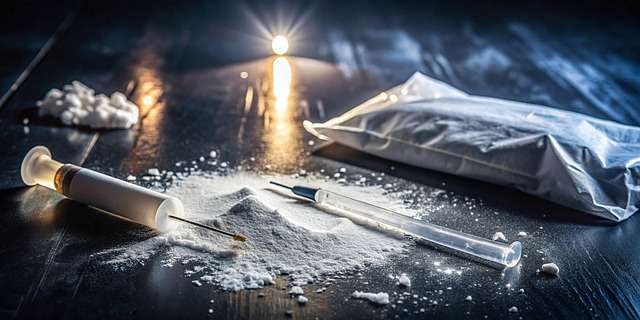
On January 22, the containers were delivered. Officers from the HARC-team — the specialised Hit and Run Cargo unit that coordinates customs, the FIOD fiscal intelligence service, and the seaport police — were waiting. Inside three of the magnets, investigators found 4,882 individually wrapped packages of cocaine, totalling approximately 4,830 kilograms. TechAfrica News Three people were arrested at the scene. A 52-year-old man from Sliedrecht was remanded in custody for 14 days pending further investigation. The other two were released. World Bank
At current market rates, the seizure carries an estimated street value of between €360 million and €400 million TechAfrica News — one of the largest drug seizures ever recorded with the Netherlands as the intended final destination. The cocaine has since been destroyed. Authorities stated there is no evidence directly linking the Moerdijk business itself to the trafficking operation, and that the containers had been intentionally allowed to complete delivery to enable the follow-up phase of the investigation. TechAfrica News
The headlines, predictably, focused on the engineering ingenuity: cocaine hidden inside industrial magnets, one of the more elaborate concealment methods Dutch customs had encountered. But the more consequential story lies not in the magnets themselves — it lies in why Moerdijk has become the address on so many of these shipments, and what that pattern reveals about the limits of the current enforcement model.
The Displacement Effect Nobody Wanted to Acknowledge
Five days before the magnet bust was publicly announced, on January 23, six Dutch coastal municipalities with smaller ports jointly announced a formal cooperation agreement to combat drug trafficking, people smuggling, and espionage through their seaports. The timing was coincidental. The underlying logic was not.
The six municipalities cited a specific concern: security improvements at major ports like Rotterdam in recent years had increased the risk of criminal activity displacing to smaller ports. Global News This is the displacement problem — the structural consequence of asymmetric enforcement that the Dutch port security establishment has been grappling with for several years, and which the Moerdijk magnet bust illustrates in near-perfect form.
Rotterdam is Europe’s largest port by container volume and among the most heavily monitored. The port’s anti-corruption team, launched in 2022, successfully disrupted key criminal networks that had embedded themselves in the terminal infrastructure ThisDayLive — the dock workers, logistics coordinators, and terminal employees whose inside access allowed drug shipments to be extracted before formal customs inspection. The result was a measurable decline in Rotterdam seizures in 2022. The number of large shipments of a thousand kilos or more intercepted at Rotterdam dropped from 13 in 2023 to eight in 2024. ResearchGate
What those figures obscure is where the volume went. Seizures in the Zeeland-West-Brabant region — which covers Moerdijk and the smaller southern ports — rose from 11,300 kilograms in 2023 to 12,664 kilograms in 2024. Tech In Africa Traffickers didn’t stop using Dutch infrastructure. They shifted toward ports with less established enforcement architecture, more recently arrived industrial tenants, and less institutional history of coordinated customs-police-judicial cooperation.
Moerdijk is, in this context, not a random target. It is the logical next address when the previous address gets too hot.
What the Mayor Actually Said
Mayor Aart-Jan Moerkerke gave a candid interview to regional broadcaster ZuidWest Uitgelicht in the weeks following the magnet bust — one of the most direct public statements by a Dutch local official about the structural dimensions of port-based drug trafficking, and one that received almost no coverage outside the regional press.
He acknowledged the anxiety directly. “It involves hard drugs and organised crime. These are serious people,” Market Data Forecast he said, while simultaneously expressing relief that the shipment had been intercepted. His framing of the municipality’s role was precise: his function is upstream of the seizure itself, working with port security partners on the physical and procedural infrastructure that makes detection possible — smart fencing, camera systems capable of identifying behavioural anomalies, coordination with the harbour authority.
Moerkerke chairs the security body of the Havenindustrieterrein, the industrial port zone, and described a broad coalition of partners: North Brabant and Zeeland authorities, the Marechaussee, harbour companies, customs, the tax authority, and multiple municipalities working together on strategic coordination. Market Data Forecast
The mayor was also candid about the awareness problem — the vulnerability that isn’t a scanner or a fence but a human being being offered money. “That they don’t say yes if someone on the street offers them 30,000 euros to borrow a pass. That awareness is something the municipality takes responsibility for,” Market Data Forecast he said, describing targeted outreach to businesses and employees about how to recognise and decline approaches from criminal networks.
This is the insider threat dimension that rarely makes the headline version of these busts. The magnets were clever. The scan was cleverer. But the question that precedes both is: how did the containers get routed to a specific business in Moerdijk, and who arranged that routing? The investigation’s continuation — with a HARC spokesperson confirming more arrests could follow World Bank — suggests that question is still being answered.
The Pattern, Compressed into Three Weeks
The magnet bust did not occur in isolation. The month of January 2026 was, by any historical measure, an extraordinary period for Dutch drug enforcement.
On February 1, just days after the magnet seizure was publicly announced, customs officers intercepted 463 kilograms of cocaine hidden in a refrigerated container of mangoes at Rotterdam, also bound for a company in Moerdijk, before onward transport to Germany. Statista Different concealment method, same municipality, same fortnight. The proximity in time and destination was not lost on investigators or on the mayor, who addressed both seizures in the same interview.
In November 2025, eight men from five countries had been arrested in a warehouse in Standdaarbuiten, also within Moerdijk municipality, after police seized 3,300 kilograms of cocaine estimated at €250 million. Statista The previous June, a telescopic crane shipped via Antwerp had been intercepted in Moerdijk carrying approximately 3,100 kilograms of cocaine hidden in its internal structure Wikipedia — a case that later led to a further arrest at Schiphol Airport of a suspect alleged to have financed the crane’s acquisition.
What emerges from this sequence is not a series of unrelated criminal operations. It is a portrait of a geography that has become embedded in the logistics infrastructure of South American cocaine trafficking to Europe — with recurring use of the same industrial zone, rotating concealment methods, and what appears to be ongoing local facilitation that has not yet been fully dismantled despite successive seizures.
The Limits of the Seizure Model
Rotterdam’s port police chief Jan Janse, speaking to investigative outlet World of Crime, was blunt about what seizure statistics actually measure: “People think that if you can investigate all crimes, you can stop crime. But nowadays, there are more criminals, more crime than we can ever investigate. It’s impossible to reach a level where we solve even 20 or 30% of all cases.” ThisDayLive
His argument — that seizures, however large, do not by themselves interrupt the supply chain — is the uncomfortable context for every record-breaking bust. The more effective interventions, in his assessment, involve disrupting the corruption networks that give traffickers their inside access, and preventing recruitment of port and logistics workers in the first place. ThisDayLive
The magnet bust is a genuine enforcement success. The HARC-team performed exactly the function it was designed for. The scanning technology worked. The controlled delivery worked. The arrests followed. None of that is diminished by the broader structural observation that the same industrial zone will almost certainly receive another shipment — in another concealment method, through another recently arrived logistics company, addressed to another business without a prior record — within months.
Moerkerke acknowledged this directly: “On the other hand, also realistic and with concern, because cocaine, hard drugs and pills remains something that is used in society. And the trade in it will continue.” Market Data Forecast
That realism — from the mayor of a municipality that is simultaneously managing the planned demolition of its historic village centre to make way for a national energy hub, fighting a multi-year battle against cartel infiltration of its port infrastructure, and trying to protect hundreds of legitimate logistics businesses from guilt-by-association — is the most honest summary of what Moerdijk faces.
The magnets were unusually clever. The problem they represent is not unusual at all.
Sources: NL Times, DutchNews.nl, ZuidWest Update, Omroep Brabant, Maritime Executive, Xinhua, World of Crime / Seasons of Crime.