Orbán
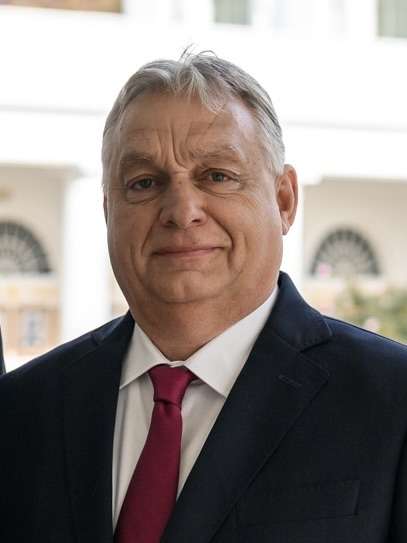
Viktor Orbán, the 56th Prime Minister of Hungary and the longest-serving leader in the European Union, has become the global face of national-conservative populism. Since reclaiming power in 2010, Orbán has systematically reshaped Hungary from a post-communist liberal democracy into what he famously termed an “illiberal state.” ### Early Life and Political Evolution
Born in 1963, Orbán first gained international prominence in 1989 with a defiant speech at the reburial of Imre Nagy, where he publicly demanded the withdrawal of Soviet troops. Originally a liberal student activist and a founding member of the Fidesz party, Orbán’s ideology shifted significantly toward the center-right in the mid-1990s.
After a first term as Prime Minister (1998–2002), his defeat led to a further hardening of his nationalist rhetoric. Returning to power in 2010 with a two-thirds “supermajority,” he utilized his mandate to overhaul the Hungarian Constitution, centralize executive power, and implement a “work-based society” built on traditional Christian values.
The “Orbán Model”
The hallmark of Orbán’s tenure is a governance style that critics describe as “democratic backsliding” and supporters view as “sovereigntism.” Key pillars of his administration include:
- Institutional Reform: Redrawing electoral boundaries and filling the Constitutional Court with loyalists to ensure long-term Fidesz dominance.
- Media and Culture: The consolidation of most private media outlets into a pro-government conglomerate (KESMA) and increased state oversight of academia.
- Anti-Immigration: A hardline stance against EU-mandated migrant quotas, epitomized by the 2015 border fence and a narrative of defending “Christian Europe.”
- Foreign Policy Pragmatism: Maintaining a “balanced” relationship with the East, particularly through close energy ties with Russia and nuclear cooperation with Rosatom, often putting Budapest at odds with Brussels.
Current Challenges and the 2026 Election
As of March 2026, Orbán’s “unshakeable” grip is facing its most significant domestic threat in decades. The emergence of Péter Magyar and the Tisza Party has shifted the political landscape, with recent polls showing the opposition leading in key demographics.
The 2026 campaign has focused on:
- Economic Stagnation: High inflation and crumbling public services, particularly in healthcare and education.
- Corruption Allegations: Growing public fatigue with the enrichment of a “national bourgeoisie” tied to the Fidesz inner circle.
- The “Peace vs. War” Narrative: Orbán has framed the upcoming vote as a choice between his “peace-oriented” government and an opposition he claims would drag Hungary into the Russo-Ukrainian conflict.
Whether Orbán can maintain his “illiberal laboratory” or if Hungary will pivot back toward a more conventional EU-aligned path remains the central question for the future of Central European politics.