A Vegetable That Reveals Everything
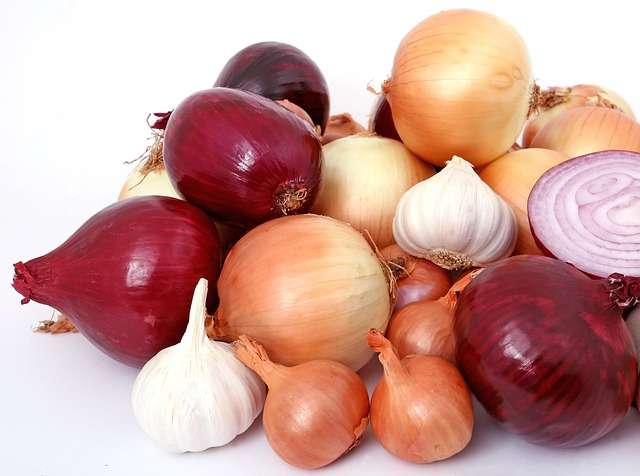
There is a particular kind of economic indicator that tells you more about the world than a quarterly GDP report or a central bank statement. It is the kind that is unglamorous, granular, and impossible to spin — the kind that reveals structural shifts precisely because nobody is trying to use it as a talking point. The Dutch onion is, in 2026, that indicator.
The Netherlands is the world’s largest onion exporter, a fact that surprises people unfamiliar with Dutch agricultural capacity until they understand that the country has spent decades engineering one of the most sophisticated vegetable production and logistics systems ever built. Dutch onion exports reached approximately 858,000 tonnes in the 2025–2026 season, a 12% increase in the first half of the season alone, according to data from the Kwaliteits-Controle-Bureau (KCB), the Dutch authority responsible for horticultural quality certification.
The number is notable. The geography of where those onions are going is transformative.
In 2016, Dutch onion exports were distributed across a relatively balanced portfolio: European neighbors, Middle Eastern markets, some African trade. In 2026, approximately half of all Dutch onion exports are heading to a single destination region: West Africa. This concentration is not the result of a Dutch commercial strategy. It is the result of four converging forces — demographic pressure, climate displacement, geopolitical fragmentation, and infrastructure gaps — that have collectively made the West African urban consumer the most important customer in Dutch agricultural trade.
Understanding why requires examining each of those forces in turn, because together they constitute not just a story about onions but a story about how global trade corridors are being redrawn in real time.
I. The Demographic Imperative: Feeding a Continent in Transition
The Numbers That Drive Everything Else
Africa’s population dynamics are, in the context of global agricultural trade, the single most important structural fact of the next three decades. The continent’s population is projected by the United Nations Population Division to reach approximately 2.5 billion by 2050, with the majority of that growth concentrated in urban areas. West Africa is at the leading edge of this transition: cities like Lagos, Dakar, Abidjan, and Accra are growing at rates that are creating entirely new consumer classes faster than regional agricultural systems can adapt to serve them.
The African Development Bank’s 2025 African Economic Outlook projected economic growth across Sub-Saharan Africa at 4.4% for 2026, marginally outpacing Asia’s 4.1% — a milestone that signals not just economic momentum but the emergence of a genuinely large and growing consumer market. For agricultural exporters, this matters in a specific and practical way: urban consumers in West Africa want vegetables available year-round, at consistent quality, at prices that reflect urban purchasing power. They are moving away from subsistence patterns toward market-dependent food consumption.
Why Local Production Cannot Keep Up
The gap between West African food demand and West African food supply is not simply a function of agricultural underdevelopment. It is structural, and it involves several reinforcing constraints that Dutch exporters have, largely by accident, found themselves positioned to address.
The storage infrastructure deficit is the most immediate constraint. Onions harvested in Senegal, Mali, or Niger have a shelf life of three to four weeks without controlled atmosphere storage. The cold chain infrastructure required to extend that to the three to six months needed for year-round market supply — refrigerated warehouses, temperature-controlled transport, trained logistics operators — is absent or inadequate across most of the region. According to FAO estimates on post-harvest losses in West Africa, between 30% and 50% of onion production in the Sahel is lost before it reaches consumers. Dutch exporters, whose supply chain infrastructure is among the most sophisticated in the world, effectively substitute for that missing cold chain by supplying European-stored product throughout the lean season.
The growing season gap compounds the storage problem. West African onion production peaks between November and February, when dry season conditions allow cultivation in the Niger River valley and the Sahelian growing zones of countries like Mali and Niger. From March through October, regional supply collapses and import dependency rises sharply. Dutch onions, harvested in August and September and stored in controlled atmosphere facilities, are available for export precisely during the period when West African production is at its lowest.
The urbanization quality premium is the third driver. Urban consumers in Dakar and Abidjan are not simply seeking calories — they are seeking consistent quality, predictable supply, and the product characteristics that Dutch export grading standards reliably provide. As World Bank research on urban food systems in West Africa has documented, the emergence of urban middle classes in West African cities is creating demand for product quality that local informal supply chains struggle to deliver consistently.
II. The Geopolitical Pivot: When Trade Routes Stop Being Neutral
The Markets That Disappeared
The 12% growth in Dutch onion exports masks a more complex story: a simultaneous collapse of some traditional markets and explosive growth in others, with the net effect being a fundamental reorientation of trade geography.
The Israel Anomaly: -89%
The near-total collapse of Dutch onion exports to Israel — down approximately 89% in the 2025–2026 season — is a case study in how regional conflict reshapes commodity trade with a speed that no market analysis predicts. The Gaza conflict that escalated from October 2023 and the subsequent regional instability disrupted Israeli import logistics, triggered insurance premium spikes for cargo vessels transiting relevant shipping lanes, and — critically — shifted Israeli governmental and commercial attention toward supply chain diversification away from European dependence. The effect on Dutch exports was almost immediate, and it illustrates a principle that RaboResearch agricultural analysts have articulated explicitly: in 2026, geopolitical events override market fundamentals in commodity trade with a speed and completeness that the pre-2020 trade environment did not exhibit.
The British Resurgence: +33%
The 33% increase in Dutch onion exports to the United Kingdom is, in its own way, equally revealing — and considerably more ironic. Brexit was, in part, justified by advocates of UK agricultural policy on the grounds that a sovereign Britain could develop greater food self-sufficiency. The onion data suggests the opposite has occurred. British onion production, which was already structurally dependent on seasonal agricultural workers who faced significant post-Brexit immigration complications, has underperformed expectations. The regulatory friction of post-Brexit trade has added cost to UK-EU agricultural commerce, but not enough cost to make UK domestic production economically preferable to Dutch imports for major buyers.
The result is a “failed self-sufficiency” — a situation where the political ambition of reducing import dependence has collided with the agricultural and labour market realities that made that dependence rational in the first place. Dutch exporters, navigating the UK-EU Trade and Cooperation Agreement’s paperwork burden, have nonetheless expanded their UK market share.
The Belgian Decline: -56%
The 56% decline in Dutch exports to Belgium — a country that shares a border with the Netherlands and, until recently, represented one of the most frictionless export relationships imaginable — reveals a different dynamic: the consolidation of EU agricultural surpluses and the pressure of cost-of-living adjustments on consumer purchasing patterns. Belgian retailers and wholesalers, facing consumers squeezed by post-pandemic inflation and energy costs, have shifted purchasing toward cheaper alternatives, including EU-sourced product from Spain and France. The shortest supply chains in Dutch export geography are being disrupted by price competition, while the longest — Rotterdam to Dakar — are proving surprisingly resilient.
III. Climate Displacement: When the Fields Move
Zeeland’s Salt Problem
The internal geography of Dutch onion production is changing, and the driver is the same force that is reshaping agricultural systems globally: climate change altering the water availability and soil chemistry that determine where crops can be grown economically.
Zeeland, the southwestern Dutch province historically central to onion cultivation, is experiencing accelerating soil salinity problems driven by sea level rise and saltwater intrusion into agricultural water supplies. The Deltares research institute, which tracks Dutch water management challenges, has documented saltwater intrusion affecting agricultural land across the coastal provinces, with Zeeland among the most severely impacted. Acreage under onion cultivation in Zeeland has approximately halved over the past decade, as farmers either shift to salt-tolerant crops or abandon cultivation entirely.
Production is migrating north and east: to Drenthe in the northeast, where higher ground and different soil profiles offer relative protection from salinity problems, and to parts of Limburg in the south, where clay soils and different water management conditions are more accommodating. This internal migration is, for now, allowing Dutch export volumes to be maintained — but it involves real costs: infrastructure investment, distance from established logistics networks, and the disruption of farming communities that have cultivated specific land for generations.
The broader pattern the IPCC’s Sixth Assessment Report on food systems identifies — “climate-stable” agricultural zones becoming increasingly relied upon to supply “climate-vulnerable” consuming populations — is visible in miniature in Dutch onion geography, and in much larger scale in the Netherlands-West Africa trade corridor itself.
The Sahel’s Production Constraints
At the destination end of the trade corridor, climate is also a structuring force. Sahelian agriculture — the farming systems of Mali, Niger, Burkina Faso, and adjacent countries — is under sustained pressure from changing rainfall patterns, increasing temperatures, and the advancing desertification that the UNCCD has documented across the region. Onion-growing areas in the Niger River valley are productive, but their yields are increasingly variable as rainfall timing becomes less predictable. Farmer adaptation — shifting planting dates, adopting drought-tolerant varieties, investing in small-scale irrigation — is happening, but it is happening against a baseline of deteriorating conditions that make local supply less reliable than it was two decades ago.
Dutch exporters aren’t primarily aware of this as a climate story. They experience it as demand consistency: West African import volumes are becoming more, not less, stable as a proportion of total consumption, because domestic production variability is increasing. What looks from Rotterdam like a growing export market is, from Niamey or Bamako, partly a story about increasing dependence on external supply for basic food security.
IV. The Infrastructure Gap That Rotterdam Is Filling
Why the Dutch Supply Chain Wins at Distance
The counterintuitive fact about the Netherlands-West Africa onion trade is that a supply chain spanning 5,000 kilometers is, in many respects, more reliable than domestic supply chains spanning 500 kilometers within West Africa. This is a function of the extraordinary sophistication of Dutch agricultural logistics infrastructure, which has been built over decades to serve exactly the kind of export-dependent, quality-sensitive trade that West African urban markets require.
Dutch controlled atmosphere storage technology, developed and refined by institutions including Wageningen University & Research, allows onions harvested in August and September to be maintained in export-quality condition through the following spring — a storage window that no facility in West Africa currently matches at scale. Rotterdam’s port, handling refrigerated cargo movements with a precision that reflects decades of logistics investment, can place a container of Dutch onions on a vessel bound for Dakar with a lead time and reliability that domestic West African logistics networks cannot match for regional distribution.
The Dutch agricultural export infrastructure — grading stations, packing facilities, phytosanitary certification through NVWA, cold chain logistics to Rotterdam’s reefer terminals — is effectively a public-private system built over generations that West African food systems do not have the capital or institutional capacity to replicate quickly. Until they do, Dutch onions will continue to fill the gap.
V. The Vulnerability Behind the Victory
A Triffin’s Dilemma for Dutch Agriculture
There is a structural tension in the current Dutch onion export success that industry analysts have begun to articulate with increasing urgency. The Triffin dilemma — originally formulated to describe the contradiction between a reserve currency issuer’s domestic interests and its global obligations — has a direct agricultural analogue in the current Dutch onion situation.
As Dutch export volumes grow and West African market concentration deepens, the Netherlands’ agricultural sector becomes increasingly exposed to risks that originate entirely outside its control: political instability in Sahelian states, currency volatility in CFA franc economies, port congestion at Dakar or Abidjan, and the kind of sudden trade disruption that geopolitical events — as the Israeli market collapse demonstrated — can produce without warning.
Half of Dutch onion exports now heading to a single region means that a political crisis in Senegal, a currency devaluation in Côte d’Ivoire, or a port strike in West Africa would not simply reduce Dutch export revenues. It would leave Dutch farmers holding product for which no alternative market at comparable volume currently exists. The West African CFA franc’s link to the euro, while providing exchange rate stability, means that currency risk operates differently here than in markets with floating exchange rates — but it also means that French monetary policy decisions can have direct effects on West African purchasing power for Dutch agricultural exports.
The Structural Dependency Question
There is a second vulnerability that operates at the destination end of the corridor and that raises questions beyond commercial risk. West African urban food security is becoming structurally dependent on a supply chain rooted in a single country 5,000 kilometers away. The FAO’s assessment of import dependency risks for developing nations emphasises that dependence on distant suppliers for basic food commodities creates systemic fragility: a drought in the Netherlands, a shipping disruption in European waters, or a Dutch domestic policy change affecting export subsidies would translate directly into food price volatility in Dakar and Abidjan.
This is the geography of what analysts at the International Food Policy Research Institute call “long-chain food security” — and it is increasingly the reality for West African cities, whether or not that dependence is explicitly acknowledged in national food security strategies.
VI. The Strategic Corridor and What Comes Next
From Trade Route to Geopolitical Architecture
The scale of the Netherlands-West Africa agricultural trade relationship is beginning to attract attention that goes beyond the commercial. European Union trade and development policy, particularly through the Global Gateway initiative — the EU’s strategic infrastructure investment programme — has identified food system connectivity between Europe and Africa as a strategic interest rather than merely a commercial one. Investment in West African cold chain infrastructure, port capacity, and agricultural storage could, in principle, both reduce import dependency and expand the market for European agricultural exports — a dual objective that aligns European development finance with European commercial interests.
The African Continental Free Trade Area (AfCFTA), which is progressively reducing intra-African trade barriers, may also reshape the corridor over time. If AfCFTA successfully enables South African or North African onion producers to access West African markets more competitively, the Dutch position in that market will face structural competition it does not currently face. South Africa’s onion sector, in particular, has production capacity and, critically, shorter shipping distances to West African ports than Rotterdam offers.
For now, Dutch logistics sophistication and controlled atmosphere storage technology provide a competitive advantage that geography alone cannot overcome. Whether that advantage survives a decade of AfCFTA integration and West African cold chain investment is the question that Dutch agricultural planners are beginning, quietly, to ask.
Conclusion: The Onion as Oracle
The Dutch onion export data for 2025–2026 is, stripped of its commercial surface, a document about the world as it is actually becoming — not as trade theorists modeled it in 1995 or as globalization optimists described it in 2005, but as the accumulated weight of demographic pressure, climate displacement, geopolitical fragmentation, and infrastructure inequality is making it in practice.
The “Continental Bridge” between the North Sea and the Sahel is not the product of a strategic plan. It emerged from the intersection of Dutch agricultural excellence, West African urbanization, climate-driven production shifts, and the collapse of markets that geopolitical events made suddenly unreliable. It is, in this sense, a map of the world’s current condition drawn in vegetable trade statistics.
As one industry analyst put it in 2026: “We are moving from a world of unhindered globalization to one of strategic corridors. The onion is simply the first commodity to reveal how fragile — and how essential — these corridors have become.”
The onion is not glamorous. Neither is the world it is revealing. But both are, in their unglamorous way, more honest about where global trade is actually heading than any macroeconomic forecast or geopolitical white paper currently being written.
This analysis draws on export data from the Kwaliteits-Controle-Bureau (KCB), agricultural research from Wageningen University & Research, trade analysis from RaboResearch, and food security assessments from FAO and the World Bank. All projections represent analytical interpretations of current trends and should not be read as forecasts.